This article will discuss the history of 4-H, a youth organization based in teaching children the importance of using innovative technology, especially in regards to agriculture.
Rooted in the US, it has spread its branches across 6 continents. Over more than a century, it has made a huge impact on both American and global agriculture. Additionally, it has also made a large impact on the lives of almost 6 million youth, 3,500 professionals, and half a million volunteers,.
But how was 4-H created? Why was it created? How has it become as large as it is today? And what controversial decisions that have harmed minority communities has it made in the past?
Read below to find out and get to know a (summarized) history of 4-H!
The History of 4-H
The Beginning of 4H: Will B. Ortwell
Originally, 4-H was created in order to address a growing concern amongst scientists at American universities. These concerns were agriculture-based.
During the late 1800’s and early 1900’s, adult farmers were not accepting agricultural innovations at the time like soil testing. This concerned many scientists: Doesn’t a lack of new ideas that can improve America’s agriculture harm the country’s agriculture industry in the future?
Will B. Ortwell, who was the Farm Institute’s President and lived in Macoupin County, Illinois, at the time thought so. Corn growers in 1898 were not accepting scientists’ new ideas that can help improve their bushel count.

As a result, with the help of growers within and outside of Illinois, Ortwell created a competition to encourage youth up to 19 years old to learn about science’s agricultural innovations.
For the competition, Ortwell asked the youth to:
- Grow corn using the innovative methods;
- Pick their best samples of corn;
- Display them at the competition on a certain date; and
- See if their samples are good enough to win a prize
This competition was extremely successful.
So successful, in fact, that not only did these competitions continue to be held, but they also spread to many other states across the US. “Corn Clubs” were created as a result.
The Beginning of 4H: Albert B. Graham
A few years later, in Springfield Township, Ohio, a school superintendent named Albert B. Graham realized the importance of the growing agricultural innovations as well.
In 1902, he began encouraging his students to interact with nature and agriculture. He taught about recent innovations in agriculture and how that applies to their farms at home. Additionally, he also taught them how to conduct science projects.
Like Ortwell’s, his initative quickly grew successful, and boys’ and girls’ clubs were born out of it.
Ortwell’s and Graham’s successes were the foundation of what became 4-H.
USDA’s Early Involvement in 4-H’s Creation
The USDA first started its involvement with 4-H in 1910 with its first tomato canning club to help girls learn about agriculture. It was founded in Aiken County, South Carolina by Marie S. Cromer.
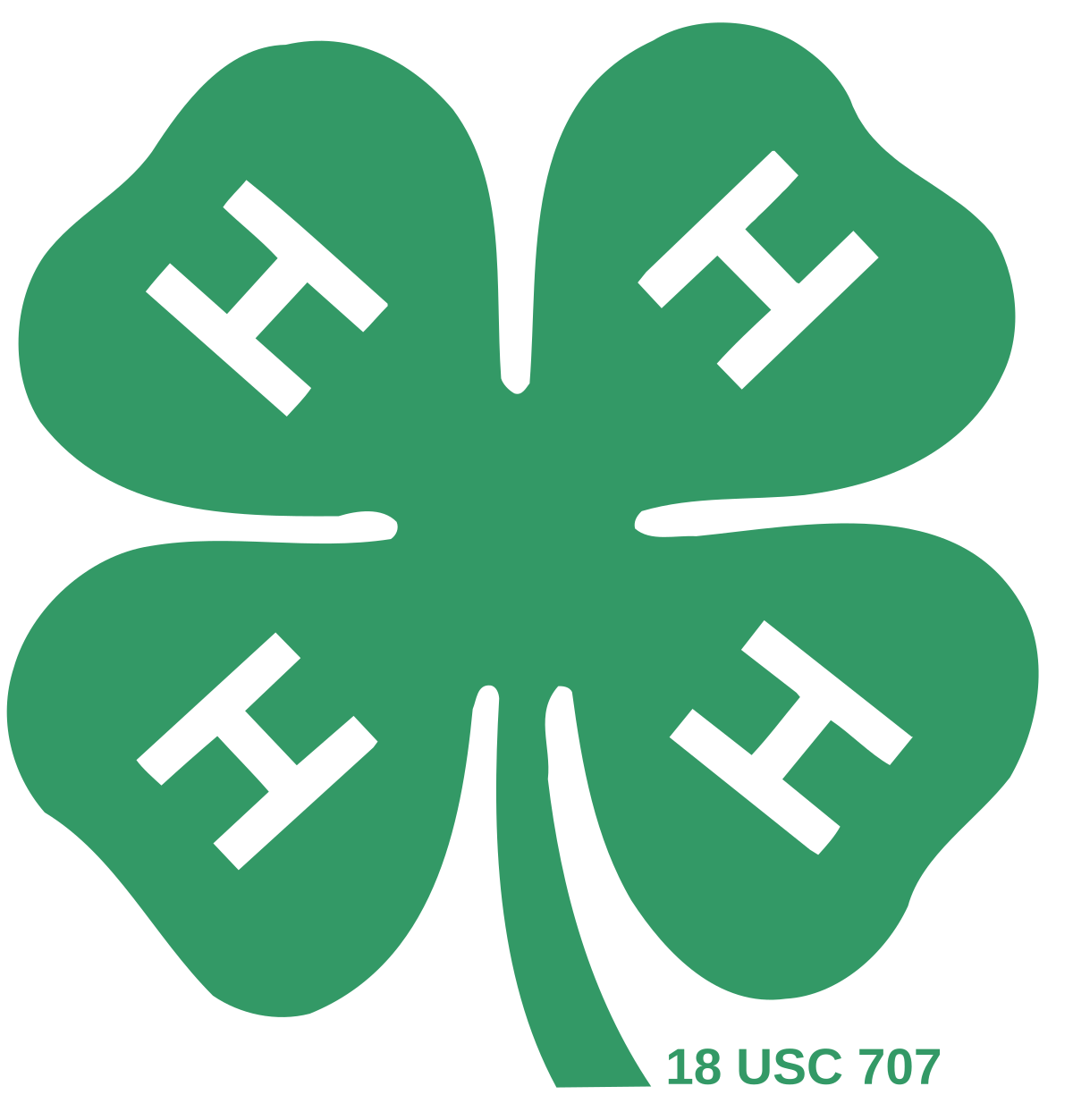
In addition, 1910 was also the year when 4-H’s symbol was created by either the director of the boys and girls’ clubs of the USDA, O.B. Marting or Jessie Field Shambaugh. I could not figure out who it was specifically, as some of my sources talking of the logo talked about these two.

The logo is a four-leaf clover with four H’s on it, which, thanks to O.H. Benson ,originally represented the organization’s principles. They were head, heart, hands, and hustle (which meant to be always hardworking at the time). O.B. Marting changed the final h, hustle, to health, and also put the H’s on the clover.
This symbol was used as badges to signify 4-H’s members as well as the products that they sold (like canned foods).
For the next few years, 4-H grew prominence as many took notice of the larger crop yields that many members had over the average farmer. For example, a year later, in 1911, Ohio Farmer noted that the top 100 corn-club members were producing over 5 times the amount of corn of the average farmer.
Realizing 4-H’s potential to help grow the country’s agriculture industry, the USDA chose to take action.
In 1914, they passed the Smith-Lever Act.
The Smith-Lever Act and Its Effects on 4-H
This act:
- Connected the USDA to land grant universities and farms to help grow the agriculture industry;
- Started the Cooperate Extension Program, which helped USDA members educate local farmers on innovative agriculture techniques; and
- Grow trust between the increasingly powerful agribusinesses, farmers and universities
Over the next two decades, this helped grow America’s agriculture industry and 4-H’s presence.
The American soldiers of WW1 helped increase 4-H’s presence as well, since they needed many crucial supplies that 4-H members could give.
Eventually, 4-H grew so large that in 1927, the first national 4-H camp in Washington, D.C was held. It was outside of USDA’s headquarters.
When the Great Depression hit America in the 1930’s, the USDA utilized their decades-long relationships with the farmers and their children who were in 4-H. They encouraged them to use more agricultural methods that are based on using technology to improve their crop yields and more labor.

In other words, they encouraged them to use techniques that resemble intensive agriculture, which favored agribusinesses as well as the USDA. As a result of the USDA’s previous efforts, this worked. Laws such as the Agricultural Adjustment Act got passed, increasing the federal government’s investment in America’s agricultural businesses as well as the USDA.
Therefore, Smith-Lever Act not only grew the USDA’s control over 4-H, but also the makeup of America’s agriculture as a whole.
World War II and Its Effects on 4-H
By WWII, the USDA has full control over 4-H’s logo and
During WWII, American soldiers were in constant need of various supplies, like metals, rags, and gasoline.
One of the most important supplies that soldiers needed was food.
USDA, as a result, called for 4-H members to grow victory gardens to cut food costs for America’s food industries and have more supplies available that they can send to troops.

This increased the interest in 4-H, including in cities such as Detroit, where 4-H clubs formed.
After WWII, America was full of patriotism, and thus decided to make 4-H an international organization. They began teaching agricultural techniques that agribusinesses implement as well as anticommunism ideals.
Over the decades, this continued.
Today, there are 4-H organizations across all the world’s continents except Antarctica.
4-H’s Controversial Decisions
Sexism and 4-H
It is crucial to note that women were not always allowed to do the same activities as men.
In the beginning, while men were learning farming techniques, women learned skills that fit the stereotypical Western view of a women: jobs fit for a housemaid.

Some skills included:
- Cooking
- Hostessing
- Childrearing
However, by the end of the 1960’s, women got to participate in the same activities as men.
Additionally, now groups with members of both genders can learn other traditionally masculine fields such as STEM (Science, Technology, Engineering, and Math).
However, this isn’t the case for members of the LGBTQIA+ community, who, in 2017, lost their protection under certain 4-H policies (Check out Young Farmer’s podcast from 2019 to learn more information).
Racism and 4-H
Up until the Civil Rights Act, black 4-H clubs were segregated from white 4-H clubs.
Unlike the white clubs, they had disadvantages such as:
- Less money from the federal government to spend on club activities; and
- An inability to visit the white National 4-H camps and conferences;
This harmed these clubs’ abilities to pursue opportunities that white clubs had as a result.

However, after the Civil Rights Act, the forced integration caused the black 4-H clubs to be shut down, since they had no more money coming in and they were illegal.
Cultural Appropriation and 4-H
There have been instances of cultural appropriation at 4-H events, such as dressing up and playing as members of Indigenous /Native American groups in 1963 West Virginia, as what Modern Farmer displays in their article.
In this case, it took almost 4 decades for this issue to be resolved. Several Native American/ Indigenous groups addressed the issue, and West Virginia 4-H apologized for what they did.
Thank you so much for reading this article! It was very interesting to do research on an organization that I have never heard of! It is interesting to see how its small beginnings quickly evolved into an organization that has had a global impact!
Want to learn more about 4-H?
Check out this cool article about 4-H memorabilia!
Or this one about 4-H’s promotional materials across the decades!
Or lots info about many other aspects of 4-H history for that matter!
Sources used to write this Article:
4-H History Section on The Official Website
Virginia Cooperative Extension
National 4-H Preservation History Program
 Culture Lizard